Kenya loses up to 40% of its total food production annually – roughly 9 million tonnes, valued at over KES 72 billion (US$578 million).
At the same time, one in four Kenyans faces food insecurity.
The real question we need to ask ourselves is – How can both of these realities exist side by side?
The answer lies in a broken system. The greatest food losses occur in our staple crops; maize and potatoes, and in highly perishable fruits such as mangoes and avocados. (You wouldn’t believe how many tonnes of perfectly looking mangoes and avocados we have fed to the pigs) poor storage, lack of cold-chain infrastructure, inefficient transport, and poor post-harvest handling all contribute to enormous losses before food even reaches the plate.
But this isn’t just a Kenyan problem – it’s a global pandemic.
As agriculture becomes more productive, we are paradoxically wasting more. Today, around 40% of all food produced globally is never eaten.
And the consequences go far beyond wasted meals and food insecurity. Every piece of food that rots represents wasted water, energy, labor, land and dollars. Worse still, when food decomposes, it releases methane – a greenhouse gas 28 times more potent than CO₂.
If food waste were a country, it would be the third-largest emitter of greenhouse gases in the world, responsible for 8–10% of global emissions.
So yes – this is one hell of a problem.
From Waste to Resource: A Regenerative Opportunity
Waste is a human construct. Nature does not waste.
Here at Ololo we have developed a close link between our farm, lodge, and customer – so very little goes to waste. But more importantly, we actively work on building a farming system that up cycles everything we can, turning this ‘waste’ problem, into a solution. Here are our top 6 projects which are tackling the food waste challenge:
1. Pigs: Tractors you can eat once they’re finished working
As per my previous post on Pigs. They are by far the most valuable animal on our farm. They devour all our left over kitchen scraps and local market waste are channeled into feeding these ‘tractors’ , converting 2.5 tonnes of food waste (weekly) into high-quality, regeneratively raised pork.
At the same time, their manure feeds back into the soil, their snouts also help to till the soil closing the nutrient loop and boosting fertility across the farm!
You can watch the video my good friend Mr. Duncan Moore made on our pigs as a food waste solution by clicking here.
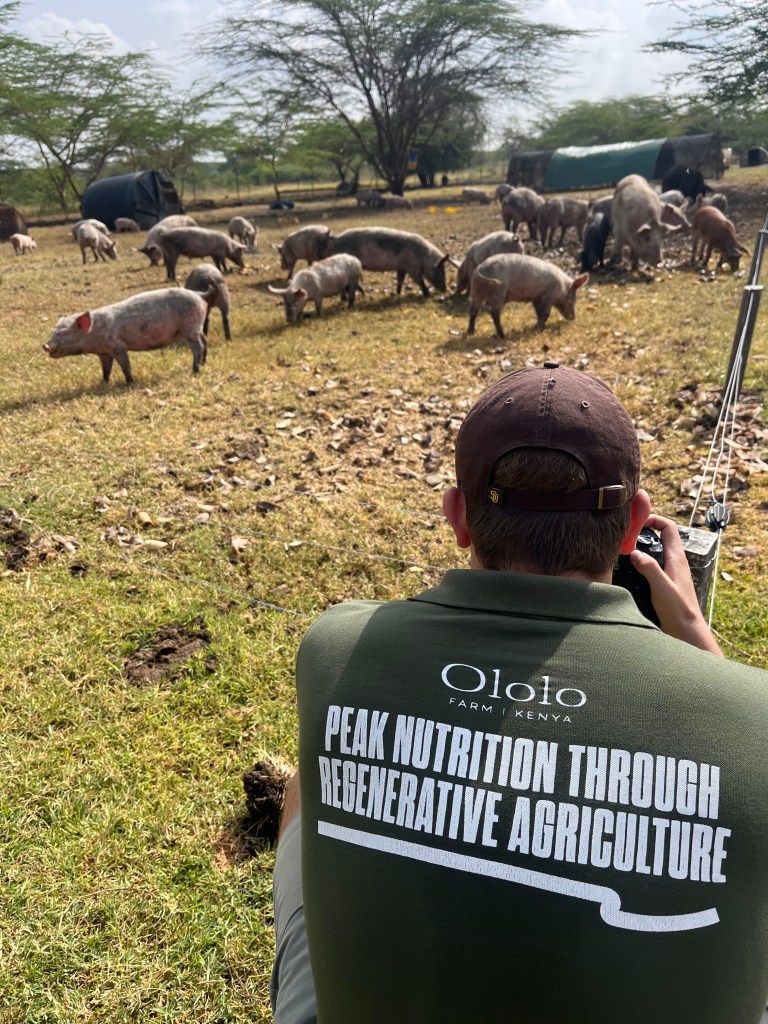
Duncan on shoot.
2. Black Soldier Fly (BSF) : The Future of Feed
Our Black Soldier Fly larvae system transforms organic waste into:
- High-protein livestock feed
- Nutrient-rich fertiliser
This reduces reliance on imported feeds while creating a circular, on farm protein source, lowering both costs and environmental impact. All the food waste from our lodge restaurant and staff kitchen get fed to these incredible little insects, which in turn produce a rich protein meal that we feed back to our chickens, pigs and pond full of tilapia fish. Even better, the leftover waste (called frass) makes an excellent fertiliser for our shamba. To learn more about the incredible role of black solider fly insects in solving Kenya’s food was challenge you can read more about the growing industry by reading further in this article.
You can also see Kevin talk about our own Black Soldier Fly project in the UN global compact video here . (Please skip to the 2 min mark).
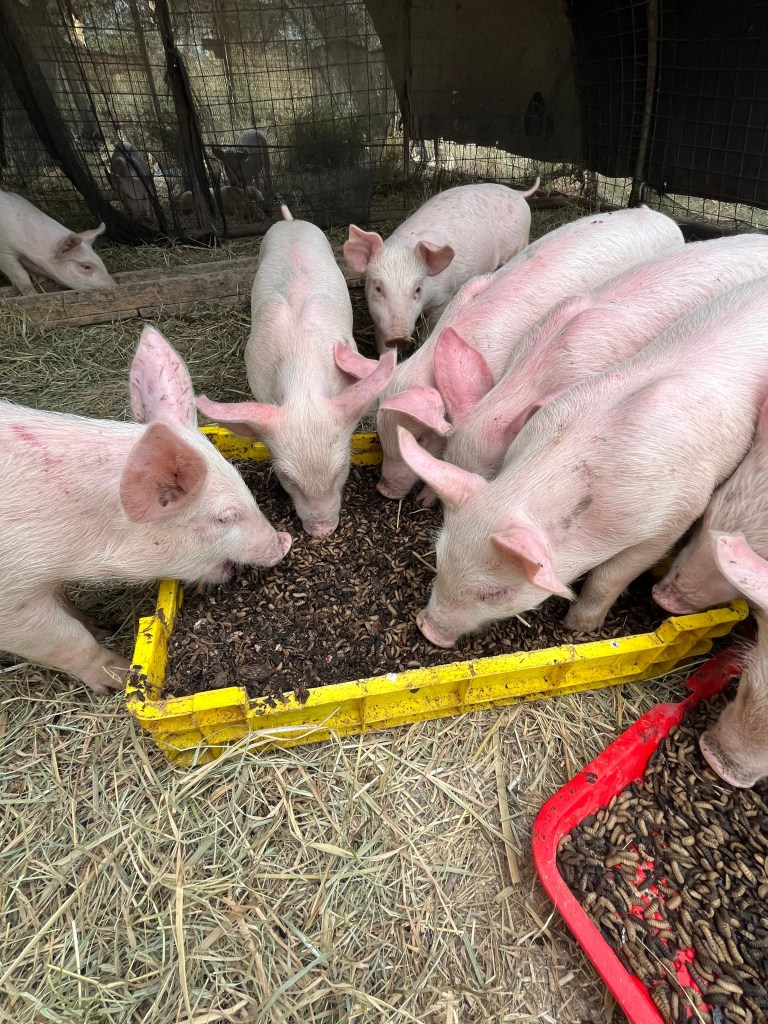
Piglets feasting on black soldier fly larvae.. A high speed injection of protein
3. Biogas: Turning Waste into Energy
Through our biogas digester, organic waste and manure are converted into:
- Clean cooking gas
- Liquid fertiliser
Animal waste from the farm and outside food waste which is trucked in (approx 1/2 tonne weekly) is converted into clean cooking gas through our bio-gas system. This not only provides an Eco-friendly energy source for our staff kitchens but also reduces reliance on firewood or charcoal. It’s another way we close the loop between farming, food, and energy.
If you are interested in knowing more about bio-gas or installing your own system please get in touch with Dominic Kahumbu from Flexi-biogas soulutions.
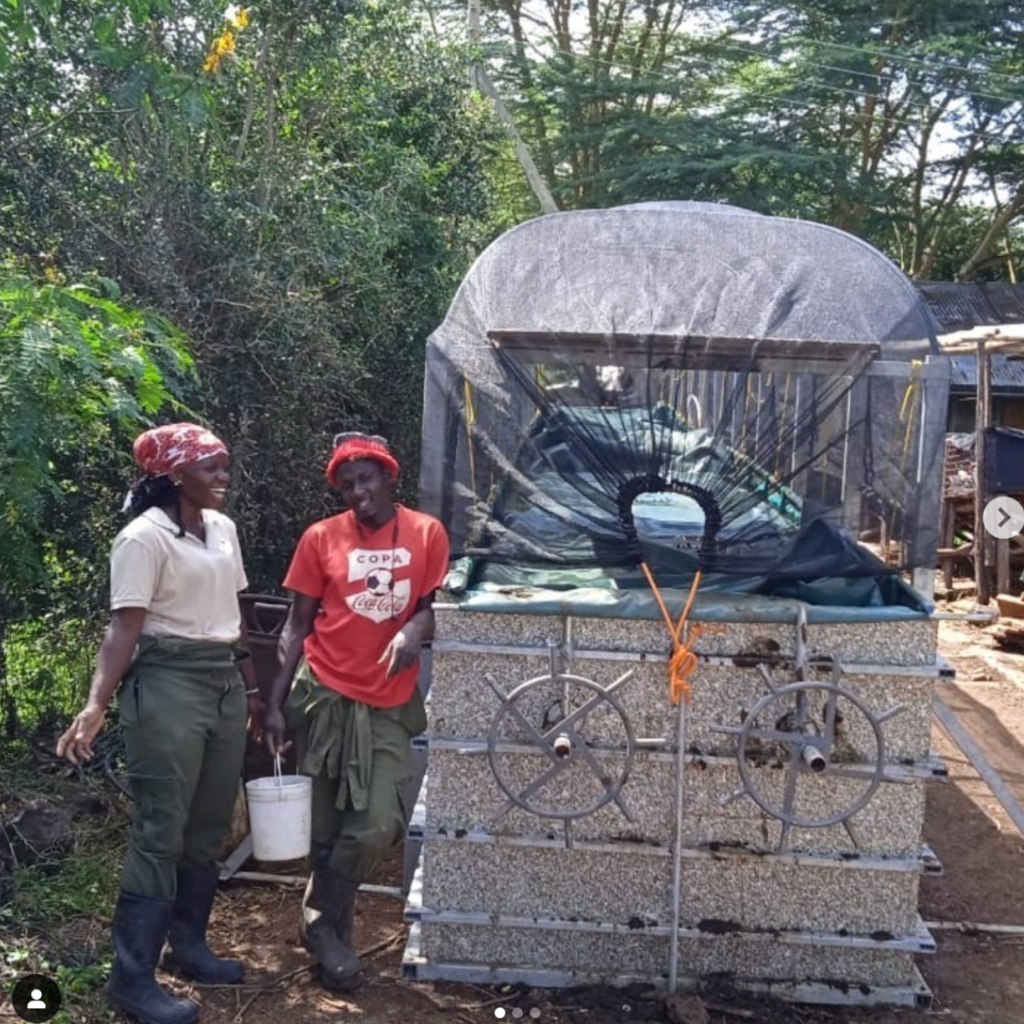
Our bio-gas system is in effect the same as a large human stomach which breaks down organic matter and kicks out a clean gas out the back end! We are able to cook for 60 staff off of this system.
4. Composting: Building Soil, Not Landfills
All remaining organic matter is composted and returned to the land, improving:
- Soil structure
- Water retention
- Microbial life
Composting and mulching is also essential for building soil health and ground cover on your farm. For every 1% increase in Soil Organic Matter there is a 7% increase in water infiltration – so in the wet season or when it rains and when we irrigate the pasture act as a sponge where all the moisture is absorbed. A big problem in many farmers these days is overgrazing and overstocking over livestock which leaves bare ground and when it rains the water washes away the top soil and all nutrients.
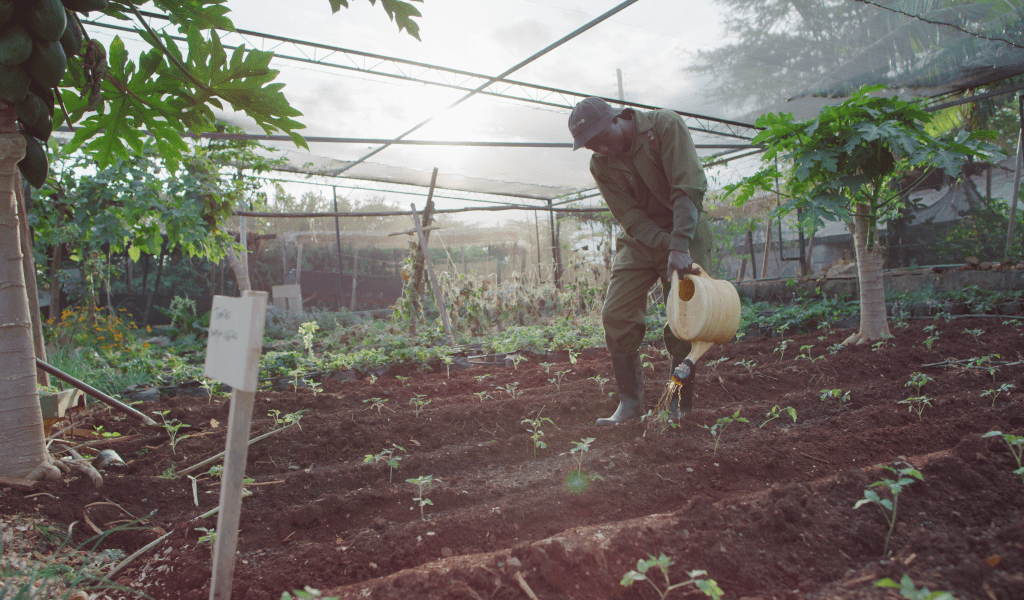
5. Closing the Loop with Farm to Feed – Kenya
We’ve also partnered with Farm to Feed, an incredible organisation here in Kenya who are rescuing surplus and imperfect vegetables that would otherwise go to waste.
These vegetables are used in our lodge and staff kitchens as well as in Ololo Farm’s chicken and beef bone broth products, ensuring that nutritious food is not discarded simply because it doesn’t meet cosmetic or consumers ridiculous standards!
It’s a powerful collaboration connecting food rescue with value-added production, and ensuring that more of what is grown actually nourishes people.
6. From Bone Broth to Biochar!
Even after production, the nutrient cycle continues. Once our beef bones have been used for bone broth, they are not discarded. Instead, they are:
- Processed into biochar , locking carbon into the soil
- Crushed into calcium-rich soil amendments for our shamba
Waste seen as a resource
Food waste is often seen as inevitable. But it doesn’t have to be. With the right systems in place, waste becomes:
- Livestock Feed
- Fuel
- Soil Fertility
- Nutrition
Because the goal isn’t simply to produce food! It’s to build a system where nothing is wasted, everything has value, and where livestock are critical in regenerating our land.
Thank-you for supporting our regenerative farming projects.
George
 Ololo Farm, Kenya - A blog about regenerative agriculture
Leave a comment